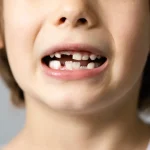

If your child’s teeth look yellow, it is usually normal. Permanent (adult) teeth are naturally more yellow than baby teeth because they contain more dentin, the inner tissue that has a yellow tone. When permanent teeth first come in, especially between ages 6 and 12, the contrast next to bright white baby teeth can make them appear even darker. In some cases, yellow spots may be related to enamel development issues, but most discoloration is not a sign of poor hygiene or disease.
Why Do Permanent Teeth Look More Yellow Than Baby Teeth?
Permanent teeth are built differently from baby teeth.
Baby teeth tend to look bright white because they have:
- Thinner dentin (the yellow inner layer)
- More opaque enamel that blocks the yellow color underneath
Permanent teeth, on the other hand, have:
- Thicker dentin, which is naturally yellow
- Slightly more translucent enamel, allowing that color to show through
When both types are present in the mouth during the “mixed dentition” stage (usually ages 6 to 12), the new teeth can look especially yellow simply because they sit next to much whiter baby teeth.
This difference is completely normal and expected.
Could Yellow Teeth Be Caused by Enamel Problems?
Sometimes the yellow color is more noticeable because of how the enamel developed.
Enamel is the hard outer layer of the tooth. If it is thin or not fully mineralized, the yellow dentin underneath becomes more visible.
One specific condition that can cause this is Molar Incisor Hypomineralization (MIH). Children with MIH may have:
- Creamy, yellow, or brown patches on molars or front teeth
- Teeth that appear dull rather than shiny
- Increased sensitivity to hot or cold
- Enamel that chips or wears more easily
MIH is a developmental condition, meaning it occurs while the teeth are forming, not because of anything a parent or child did wrong.
Are There Other Reasons for Yellow Marks on Teeth?
In some cases, discoloration can be related to how minerals were incorporated into the teeth during development.
For example:
- Imbalances in calcium during tooth formation
- Enamel that did not harden properly
- Natural variations in tooth structure
These factors can cause yellowish or creamy areas on certain teeth, especially newly erupted permanent molars or incisors.
Is This a Sign of Poor Brushing?
Usually, no.
If the yellow color is evenly spread across the tooth or present as defined patches that do not brush away, it is likely related to the tooth’s structure rather than plaque or staining.
However, surface stains from foods, drinks, or plaque can also contribute to discoloration, so maintaining good oral hygiene is still important.
What Are the Risks of Ignoring Yellow Teeth?
Most of the time, yellow permanent teeth are harmless. But if discoloration is caused by enamel weakness, there can be additional concerns.
Teeth with poorly mineralized enamel may be:
- More sensitive
- More prone to cavities
- Easier to chip or wear down
- Difficult for children to brush comfortably
Early monitoring helps prevent future problems.
What Can Parents Do at Home?
You cannot change the natural color of dentin, but you can support your child’s dental health and appearance.
Helpful steps include:
- Ensure brushing twice daily with fluoride toothpaste
- Supervise brushing for younger children
- Limit frequent sugary snacks and drinks
- Encourage water as the main beverage
- Watch for sensitivity or discomfort
Avoid over-the-counter whitening products for children unless recommended by a dentist.
When Should You See a Pediatric Dentist?
Consider a professional evaluation if you notice:
- Yellow spots or patches rather than uniform color
- Sensitivity to hot, cold, or brushing
- Rapid discoloration or darkening
- Enamel that looks rough, chalky, or chipped
- Concerns about appearance affecting your child’s confidence
A pediatric dentist can determine whether the color is normal or related to an enamel condition.
In many cases, treatment options can be considered later once the teeth have fully erupted.
Can Yellow Permanent Teeth Become Whiter Over Time?
Yes, the appearance often improves naturally.
As more permanent teeth come in and baby teeth fall out, the contrast disappears. What once looked yellow compared to baby teeth usually looks normal among other adult teeth.
If needed, cosmetic options may be discussed in adolescence or adulthood, depending on the cause.
How Can You Help Prevent Future Discoloration?
While you cannot change genetic or developmental factors, you can support strong enamel development and reduce staining.
Focus on:
- Balanced nutrition with adequate calcium
- Regular dental checkups
- Good daily oral hygiene habits
- Limiting frequent sugary or acidic foods
- Addressing dental concerns early
A Reassuring Note for Parents
Seeing yellow teeth in your child can be surprising, especially when compared to bright white baby teeth. In most cases, this change simply reflects the normal transition to permanent teeth and does not indicate a problem.
If discoloration is related to enamel development, pediatric dentists can monitor the teeth and recommend appropriate care when needed. With proper guidance and routine dental visits, most children maintain healthy, functional, and attractive smiles as they grow.
If you are ever unsure, a quick dental check can provide peace of mind and ensure your child’s teeth are developing as they should.