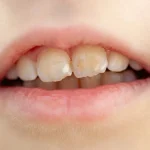

Silver diamine fluoride (SDF) is a liquid dental treatment used to help prevent tooth cavities (caries) from forming, progressing, or spreading to other teeth. It is especially useful in pediatric dentistry and preventive care.
Silver diamine fluoride contains two main components:
- Silver, which helps kill cavity-causing bacteria
- Fluoride, which strengthens tooth enamel and supports remineralization
SDF was first approved for use in Japan more than 80 years ago. In 2014, silver diamine fluoride was approved by the U.S. Food and Drug Administration (FDA) for use in the United States.
Silver diamine fluoride is one of the treatment options used in our pediatric dental care to help manage cavities conservatively. It may be recommended when a gentle, non-invasive approach is appropriate.
How Is Silver Diamine Fluoride Used?
Most dentists use a liquid form of silver diamine fluoride containing approximately 38 percent SDF solution. It is applied topically, meaning it is placed directly on the tooth surface.
A typical SDF application includes the following steps:
- Cotton or gauze is placed near the affected tooth to control saliva.
- The tooth surface is gently dried using suction.
- Silver diamine fluoride is applied to the area affected by decay.
- A fluoride varnish may be applied afterward to help protect the tooth.
In some cases, dentists may also use materials such as glass ionomer, an opaquer, or a crown to mask the treated area if needed.
Silver diamine fluoride is most commonly used in our pediatric dental care to help manage cavities conservatively. Research shows it can also be effective as a preventive treatment when applied to healthy tooth surfaces.
Unlike traditional treatments, cavities do not always need to be drilled or filled before applying SDF. Studies have shown that silver diamine fluoride is often more effective at slowing or stopping cavity progression than fluoride varnish alone, and it typically requires fewer applications over time.
Most patients only need silver diamine fluoride once per year, while fluoride varnish often requires four or more applications annually.

How Does Silver Diamine Fluoride Benefit Oral Health?
Silver diamine fluoride offers several important benefits:
- It can stop the progression of existing cavities, a process dentists refer to as caries arrest.
- It helps eliminate bacteria that cause tooth decay and prevents them from spreading to nearby teeth.
- It is a comfortable, non-invasive alternative to drilling, making it especially helpful for children, anxious patients, or individuals with special healthcare needs.
- It can be useful for patients who are sensitive to traditional dental instruments or materials.
- It is quick to apply, requires no special equipment, and often only needs one application per year.
Silver diamine fluoride is commonly recommended for early cavities, very young children, and patients who are not ready for traditional dental procedures. It is also helpful when delaying treatment is clinically appropriate.
Many parents choose silver diamine fluoride because it is fast, painless, and does not require drilling or injections. It allows cavities to be stabilized while keeping the child comfortable and stress-free.
In pediatric dentistry, SDF is often used as part of a preventive and conservative treatment plan. It supports cavity control while preserving natural tooth structure during growth and development.
Are There Any Side Effects?
Silver diamine fluoride is widely considered safe, including for use in young children. However, it should not be used in patients with a known silver allergy, advanced gum disease, or severe tooth decay that has exposed the soft inner tissue of the tooth.
The most common side effect of silver diamine fluoride is black staining on the area of the tooth where it is applied. This staining indicates that the cavity has been treated and is no longer active. Surrounding healthy tooth structure is not affected.