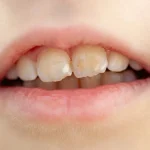

Children’s teeth can chip due to injuries, teeth grinding (bruxism), or habits like nail-biting and chewing hard objects. In rare cases, enamel development conditions such as Molar Incisor Hypomineralization (MIH) can make teeth more fragile. Once enamel chips, the tooth may become sensitive and more vulnerable to damage, so evaluation by a pediatric dentist is important.
What Causes Teeth to Chip in Children?
Chipped teeth in children are usually linked to one of several common causes.
1. Falls and Sports Injuries
Children are naturally active. Running, climbing, and playing sports increase the risk of dental injuries. Even minor falls can cause small chips, especially in the front teeth.
2. Bruxism (Teeth Grinding)
Bruxism is the grinding or clenching of teeth, often during sleep. Repeated grinding puts pressure on enamel, the hard outer layer of the tooth. Over time, this can weaken the enamel and lead to chipping.
3. Nail-Biting and Chewing Hard Objects
Certain habits may also damage enamel, including:
- Nail-biting
- Chewing pencils
- Biting on toys
- Opening packages with teeth
These habits apply repeated stress to the enamel and may cause small fractures or chips.
4. Enamel Development Conditions (Such as MIH)
In rare cases, chipped enamel may be linked to a developmental condition called Molar Incisor Hypomineralization (MIH).
With MIH:
- Enamel does not harden properly
- Teeth may appear creamy, yellow, or patchy
- Enamel is weaker and more prone to breaking
Because enamel forms the outer protective layer of the tooth, any weakness can increase the risk of chipping.
What Is Enamel and Why Is It Important?
Enamel is the outermost layer of the tooth. It protects the inner layers, including dentin and the nerve.
When enamel chips:
- The tooth may feel rough
- Sensitivity to hot or cold may increase
- The inner layers become more exposed
- The risk of cavities can increase
Although enamel is the hardest substance in the body, it cannot regenerate once lost.
Is a Small Chip a Serious Problem?
Not all chips are emergencies.
Small, smooth chips without pain may simply require monitoring. However, you should seek evaluation if:
- The tooth is sensitive
- The chip is sharp
- There is visible dentin (yellow layer underneath)
- The tooth looks cracked
- Your child complains of pain
Even minor chips should be assessed to prevent further damage.
What Are the Risks of Ignoring a Chipped Tooth?
If left untreated, chipped enamel may lead to:
- Increased tooth sensitivity
- Higher risk of decay
- Worsening cracks
- Cosmetic concerns
- Discomfort while eating
Early assessment allows for simple solutions before complications develop.
What Can Parents Do at Home?
If you notice a chipped tooth:
- Check for bleeding or swelling
- Rinse the mouth gently with water
- Avoid giving very hot or cold foods
- Prevent your child from chewing on the affected side
- Schedule a dental evaluation
To reduce future risk:
- Discourage nail-biting and chewing on hard objects
- Limit habits that stress teeth
- Encourage use of mouthguards during sports
- Maintain regular dental checkups
When Should You See a Pediatric Dentist?
Seek professional care if:
- The chip exposes the inner yellow layer
- Your child experiences pain or sensitivity
- There is swelling or bleeding
- The injury occurred after a fall or impact
- The tooth appears loose
A pediatric dentist can smooth sharp edges, restore the tooth if needed, and check for deeper structural damage.
Can Chipped Teeth Be Repaired?
Yes, many chipped teeth can be treated effectively.
Depending on the severity, treatment may include:
- Smoothing rough edges
- Dental bonding
- Protective coatings
- Monitoring during growth
Early treatment helps preserve the tooth’s structure and comfort.
A Reassuring Note for Parents
Chipped teeth are common in children, especially during active play. Most chips are manageable and can be treated successfully when addressed early. Monitoring habits, protecting teeth during sports, and maintaining regular dental visits help keep your child’s smile healthy and strong.
If you are unsure about the severity of a chip, a pediatric dental evaluation can provide clarity and peace of mind.